
Home › Stem Cell Therapy India › Conditions › Knee Osteoarthritis
Orthopedic & Joint Conditions

Stem Cell Therapy for Knee Osteoarthritis in India

For patients with early to moderate knee osteoarthritis looking to explore options beyond painkillers and before considering surgery, HealPassage connects you with orthopedic specialists in India experienced in mesenchymal stem cell (MSC) injections — at a fraction of the cost of Western clinics.
🦵 Minimally invasive, day-care procedure
🇮🇳 Performed by orthopedic specialists in India
💰 Significant cost savings vs. US/UK/Europe
Stem Cell Therapy for Knee Osteoarthritis in India
Early–Mid
Stage OA is where evidence is strongest
Day Care
Most procedures need no overnight stay
Understanding the Condition

What Is Knee Osteoarthritis?

Before exploring treatment options, it helps to understand what's actually happening in the joint — and why the stage of your condition matters for what treatments make sense.

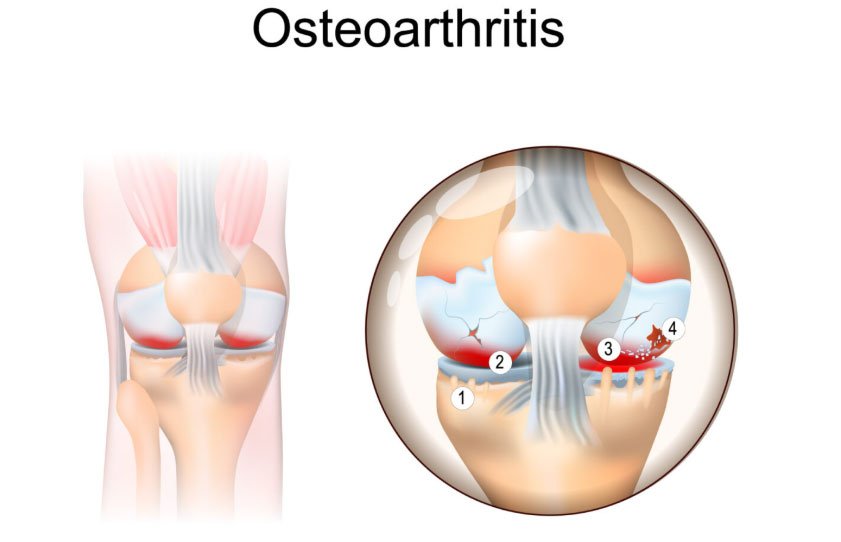
Knee osteoarthritis (OA) is a degenerative joint condition where the protective cartilage that cushions the ends of the bones gradually wears down over time. As cartilage thins, bones can begin to rub against each other, leading to pain, stiffness, swelling, and reduced mobility.

It's one of the most common causes of chronic pain worldwide, and its impact tends to build gradually — many people live with mild symptoms for years before it starts affecting daily activities like walking, climbing stairs, or standing for long periods.

Because cartilage has very limited capacity to repair itself naturally, most conventional treatments focus on managing pain and slowing progression rather than reversing the damage — which is part of why regenerative approaches like stem cell therapy have drawn interest as a potential option to explore alongside standard care.
Knee osteoarthritis cartilage degeneration diagram

Common Symptoms to Watch For

Joint Pain

Worsens with activity, standing, or climbing stairs; often eases with rest.

Morning Stiffness

Reduced flexibility after waking or after long periods of sitting.

Swelling

Visible inflammation around the joint, especially after activity.

Creaking or Grinding

A grating sensation or sound (crepitus) when bending or straightening the knee.

Reduced Range of Motion

Difficulty fully bending or straightening the knee over time.

Joint Warmth

The knee may feel warm to the touch during flare-ups.

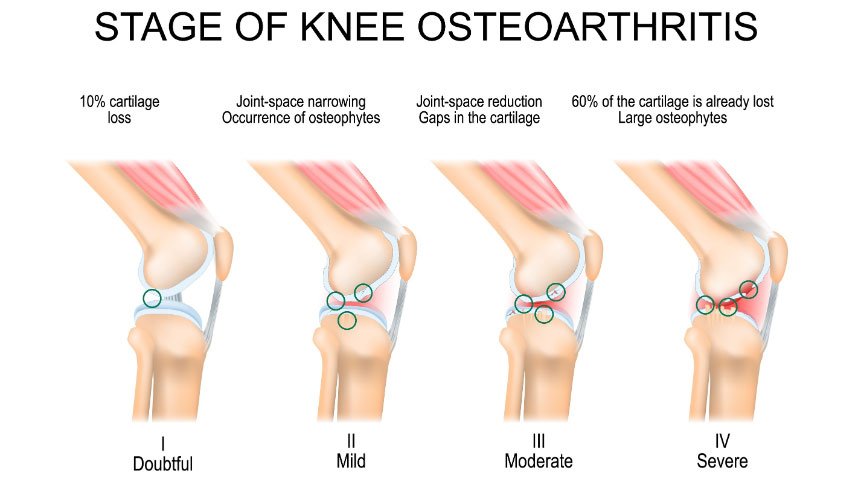
Stages of Knee Osteoarthritis

1
Minor

Minimal cartilage wear; occasional discomfort. Often no treatment beyond lifestyle changes needed.

Monitor & prevent
2
Mild

Visible cartilage thinning on imaging; occasional stiffness and pain after activity.

Case-by-case evaluation
3
Moderate

Noticeable cartilage loss, more frequent pain and stiffness, some mobility limitations.

Case-by-case evaluation
4
Severe

Significant or complete cartilage loss, bone-on-bone contact, considerable pain and limited motion.

Usually needs surgical options

The Treatment Process

How Stem Cell Therapy Works for Knee Osteoarthritis

Most knee OA treatments use autologous cells — meaning they're sourced from your own body, which avoids the need for donor matching. Here's what the process typically involves.

Step 1

Cell Collection

Cells are most commonly harvested from your own bone marrow (typically the pelvic bone) or from adipose (fat) tissue via a minor liposuction-style procedure. Both are done under local anesthesia in a single outpatient visit.

⏱ Takes 30–45 minutes
Step 2

Lab Isolation & Concentration

The sample is processed in a lab to isolate and concentrate the mesenchymal stem cells (MSCs) — the specific cell type associated with cartilage and joint tissue support. The concentrated sample is screened for quality before being approved for injection.

⏱ Same-day processing at most centers
Step 3

Image-Guided Injection into the Knee

The concentrated cells are injected directly into the knee joint, often using ultrasound guidance to ensure accurate placement. This is done as a same-day, walk-in-walk-out procedure — no hospital admission needed for most patients.

⏱ Injection itself takes under 15 minutes
Step 4

Monitoring & Rehabilitation

You'll be advised on activity modifications for the first few weeks, and many specialists recommend a structured physiotherapy plan to support the joint during recovery and help maximize any benefit from the treatment.

⏱ Follow-up typically over 3–6 months

What to Expect After Treatment

First 1–2 Weeks

Mild swelling or soreness at the injection site is common. Light activity is usually fine; high-impact movement is avoided.

4–6 Weeks

Gradual return to normal activity, often alongside a physiotherapy plan to support joint mechanics.

3 Months

Many patients report initial changes in pain or stiffness around this point, though this varies considerably by individual.

6–12 Months

Follow-up imaging or assessment may be recommended to evaluate how the joint has responded over the longer term.

Candidacy

Is Stem Cell Therapy Right for Your Knee?

Not every case of knee osteoarthritis is an equally strong fit. Here's a general guide — though a full evaluation by a specialist is the only way to know for certain.

You May Be a Good Candidate If:

  • ✓You've been diagnosed with mild to moderate knee osteoarthritis (Grade 2–3 on imaging).
  • ✓You've tried conservative treatments (physiotherapy, medication, injections) with limited or short-lived relief.
  • ✓You want to explore options before committing to knee replacement surgery.
  • ✓You're in reasonably good general health, without uncontrolled diabetes or active infections.
  • ✓You understand this is a supportive option, not a guaranteed cure, and have realistic expectations.

May Need Closer Evaluation If:

  • !You have severe, bone-on-bone osteoarthritis (Grade 4) — surgical options are often more appropriate here.
  • !You have an active infection, autoimmune flare, or untreated blood disorder.
  • !You're currently on blood thinners or certain medications that may need to be paused beforehand.
  • !You're pregnant, or have an active cancer diagnosis.
  • !You're expecting a guaranteed outcome or a permanent fix — this treatment works best with realistic expectations.

Not sure which category you fall into?

Send us your knee X-ray or MRI report and a brief history of your symptoms. Our partner orthopedic specialists will give you an honest, no-obligation opinion on whether this treatment is worth pursuing for your case.

Get a Free Specialist Opinion →

Stem Cell Therapy vs. Conventional Knee OA Treatments

Comparing your real options — from painkillers to knee replacement — so you can make an informed decision about treating your knee osteoarthritis.

Factor Painkillers / Injections Knee Replacement Surgery Stem Cell Therapy
Invasiveness Low, but repeated long-term use Major surgery, joint removed Minimally invasive, day-care procedure
Recovery Time None (but symptom relief only) 3–6 months rehab 1–2 weeks, gradual improvement over months
Addresses Root Cause No — masks pain only Replaces joint, doesn't regenerate tissue Aims to support cartilage repair & reduce inflammation
Hospital Stay None 4–7 days Usually same-day or 1 night
Risk of Complications Long-term organ/GI side effects Infection, blood clots, implant wear Low — uses your own cells
Approximate Cost Low upfront, high over years $$$$ (high, plus revision surgery risk) $$ (moderate, one-time)
Ideal For Very mild, early-stage symptoms Severe, end-stage joint damage Mild to moderate OA, or those wanting to delay/avoid surgery

*Individual results vary. Final treatment recommendation is made after reviewing your medical reports.

Pricing

Cost of Stem Cell Therapy for Knee Osteoarthritis in India

As a single-session, autologous procedure, knee OA treatment is one of the more affordable stem cell applications — and India offers particularly strong value compared to other countries. For a broader overview, explore our stem cell therapy cost in India guide.

How India Compares Globally (Approximate, Per Knee)

🇮🇳 India
$5,000–$6,000
🇹🇭 Thailand
$7,000–$9,000
🇬🇧 UK
$12,000–$16,000
🇺🇸 USA
$15,000–$22,000+
Single Knee

Autologous MSC Injection

$5,000 – $6,000

Covers cell harvesting, lab processing, and image-guided injection into one knee.

Both Knees

Bilateral Treatment

$8,500 – $10,500

Most patients with OA in both knees can be treated in the same visit at a lower combined cost.

Add-On

PRP Combination Therapy

+$500 – $900

Some specialists combine MSC injections with Platelet-Rich Plasma (PRP) for added supportive effect.

These figures are general estimates for planning purposes and can vary based on your specialist, hospital, and the extent of joint involvement. They typically do not include travel, accommodation, or pre-treatment diagnostic tests — your coordinator will provide a full itemized quote after reviewing your case.

Common Questions

Frequently Asked Questions

Answers to what patients most often ask about stem cell therapy for knee osteoarthritis.

Can stem cell therapy help me avoid knee replacement surgery? +

It may help some patients with mild to moderate osteoarthritis manage symptoms and delay the need for surgery, but there's currently no strong clinical evidence proving it can reliably prevent or replace knee replacement. For severe, bone-on-bone osteoarthritis, surgery generally remains the more predictable option. Your specialist can give you an honest assessment based on your imaging and symptoms.

Can stem cell therapy regenerate knee cartilage? +

Stem cells have the potential to differentiate into chondrocytes (cartilage-producing cells) and release growth factors that support tissue repair. While clinical evidence shows it effectively reduces inflammation, eases joint pain, and improves mobility, complete cartilage regeneration varies depending on the severity of joint wear and the patient's age.

What is the cost of stem cell therapy for knees in India? +

The cost typically ranges between $5,000 and $6,000 USD per knee joint. Factors influencing the total price include whether it is combined with bone marrow aspirate or PRP, hospital facility fees, and the severity of joint degeneration.

What are the pros and cons of stem cell therapy for knees? +

Pros: Minimally invasive injection procedure, low risk of rejection (uses autologous cells), fast recovery, and effective reduction of pain and inflammation.

Cons: High out-of-pocket expense (not covered by standard insurance), variable long-term success rates, and reduced effectiveness in advanced Stage 4 osteoarthritis.

Is the procedure painful? +

Both the cell collection and the knee injection are done under local anesthesia. Most patients report mild discomfort rather than significant pain. Some soreness, swelling, or stiffness at the injection site for a few days afterward is common and generally manageable with rest and over-the-counter pain relief as advised by your doctor.

How many sessions will I need? +

Most patients undergo a single treatment session per knee. Depending on your response and your specialist's assessment, a follow-up injection may occasionally be recommended some months later — but this isn't the default and will be discussed based on your progress.

When will I notice results, and how long do they last? +

Some patients report changes in pain or stiffness within a few weeks to a few months, though response varies significantly between individuals and isn't guaranteed. There's currently limited long-term data on exactly how long any benefit lasts, which is why realistic expectations and follow-up with your specialist matter.

Do I need to stay in India for the full recovery period? +

No. Since the procedure is done on a day-care basis with no hospital admission required, most international patients stay in India for just 2–4 days to allow for the initial consultation, procedure, and a short observation period before flying home. Ongoing rehabilitation, if recommended, can usually be coordinated with a physiotherapist in your home country.

Can I combine this with other knee treatments like PRP? +

Yes, some specialists combine MSC injections with Platelet-Rich Plasma (PRP) therapy, as both work on tissue support through different mechanisms. Whether this combination makes sense for you depends on your specific case, and your specialist will advise on this during your evaluation.

Where can you get stem cell therapy for knees? +

Stem cell procedures for knee conditions are offered at accredited orthopedic hospitals, specialized regenerative medicine clinics, and tertiary care centers. Patients should consult a board-certified orthopedic specialist or regenerative sports medicine expert to determine if they are a suitable candidate.

What reports do I need to send for an initial opinion? +

A recent knee X-ray or MRI report, along with a brief summary of your symptoms, past treatments tried (medications, physiotherapy, injections), and any relevant medical history, is usually enough for our partner specialists to give you an initial opinion.

Ready to find out if this treatment is right for your knee?

Explore More

Related Conditions We Treat

Stem cell therapy can help with a range of joint, muscle, and connective tissue conditions. Explore related treatments that may apply to your recovery journey.

Scroll to Top