
Stem Cell Therapy for Progressive Supranuclear Palsy in India
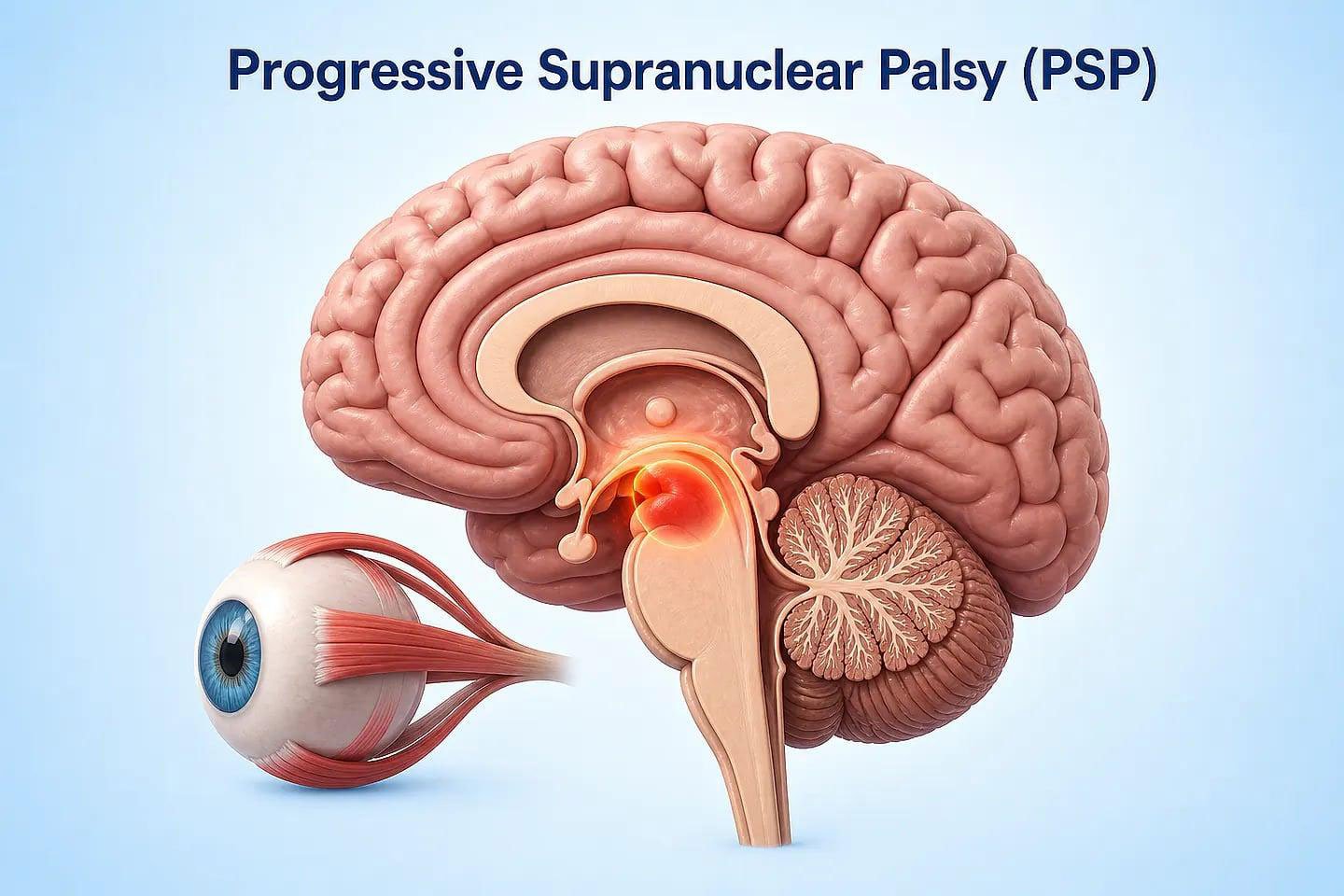
Progressive supranuclear palsy (PSP) is a rare neurodegenerative disorder that can affect movement, balance, eye movements, speech, swallowing and thinking. Current care focuses mainly on managing symptoms and maintaining safety and quality of life. Stem cell and other regenerative approaches are being explored in research, but they should not be presented as a proven cure for PSP.
- Specialist neurological evaluation
- Individualized treatment planning
- Regenerative medicine research
- Care coordination in India
Evaluation
Care
Options
What Is Progressive Supranuclear Palsy?
Progressive supranuclear palsy, often called PSP, is a rare neurological condition that gradually affects areas of the brain involved in movement, balance, eye control and other important functions. Because symptoms can overlap with other neurological disorders, an experienced specialist assessment is important for reaching the most appropriate diagnosis.
Movement and Balance
PSP can cause stiffness, slowed movement, difficulty walking and problems with balance, which may increase the risk of falls.
Eye Movement Changes
Difficulty controlling eye movements, particularly looking up or down, is an important feature that doctors may assess.
Speech and Swallowing
Some people develop changes in speech, swallowing or facial movement as the condition progresses.
Cognitive and Behavioral Changes
PSP may also affect thinking, attention, emotional responses or behavior, although the pattern varies between individuals.
Common Features May Include
- Difficulty with balance or repeated falls
- Stiffness and slowed movements
- Problems with eye movement
- Changes in speech or swallowing
- Changes in facial expression
- Thinking, attention or behavioral changes
Why Specialist Assessment Matters
- Symptoms can resemble other movement disorders
- A detailed neurological examination may be needed
- Medical history helps identify the pattern of symptoms
- Imaging or other investigations may support the assessment
- Diagnosis helps guide appropriate supportive care
- Ongoing monitoring can help address changing needs
Why Is Stem Cell Therapy Being Studied for Progressive Supranuclear Palsy?
Progressive supranuclear palsy involves progressive changes in parts of the brain that control movement and other important functions. Researchers are exploring whether regenerative and cell-based approaches could influence disease-related biological processes. At this stage, however, these approaches remain investigational and should not be presented as established treatment for PSP.
Understanding the Research
Stem cells and other cell-based therapies are being studied in several neurological conditions because of their potential biological effects on damaged or stressed tissues. Research in PSP is focused on understanding whether specific cellular approaches could influence the underlying disease environment or support neurological function.
Why More Research Is Needed
PSP is a complex neurodegenerative condition, and different experimental approaches may work in very different ways. Researchers need stronger clinical evidence to determine whether cell-based treatments are safe, effective and appropriate for people with PSP.
Neuroprotection
Researchers are studying whether certain biological approaches could help protect vulnerable nerve cells.
Cellular Signaling
Some research examines how cells and cell-derived factors communicate with surrounding tissues.
Brain Tissue Environment
Experimental research also looks at biological processes that may contribute to neuronal stress and degeneration.
Future Therapies
Ongoing research may help identify new approaches for managing or modifying neurodegenerative disease.
Who May Be Considered for a Regenerative Treatment Evaluation?
A regenerative treatment evaluation is not appropriate for every person with progressive supranuclear palsy. Before any experimental or cell-based approach is discussed, a specialist should review the diagnosis, symptoms, medical history, current treatment and overall health.
Confirmed Diagnosis
The first step is confirming that the clinical picture is consistent with PSP and considering other possible neurological conditions.
Disease History
Doctors may review when symptoms began, how they have changed and which functions are currently affected.
Previous Treatment
Current and previous medicines, rehabilitation and other supportive treatments can help provide a clearer picture of care needs.
Relevant Medical Records
Neurology reports, imaging, laboratory results and other relevant records may be reviewed before discussing options.
Overall Health
Other medical conditions, medications and general health can affect whether a proposed procedure is appropriate.
Realistic Expectations
Patients should understand that an investigational approach may have uncertain benefits and should not be viewed as a guaranteed cure.
What May Be Reviewed Before Treatment?
- Confirmation of the neurological diagnosis
- Current symptoms and functional abilities
- Progression and duration of symptoms
- Previous and ongoing treatments
- Relevant imaging and laboratory findings
- Other medical conditions and medications
What Should the Discussion Include?
- The exact cell-based approach being proposed
- Available clinical evidence
- Potential risks and uncertainties
- Established care and alternatives
- Expected monitoring and follow-up
- Realistic goals and limitations
Evaluation Before Considering Stem Cell Therapy for PSP
A careful neurological evaluation should come before any discussion of a cell-based or regenerative procedure. The goal is to confirm the diagnosis, understand the patient's current needs and determine whether the proposed approach has a reasonable medical basis.
What a Specialist May Assess
- Current neurological symptoms
- Balance, walking and movement abilities
- Eye movement and visual symptoms
- Speech, swallowing and communication
- Cognitive or behavioral changes
- Overall disease progression
Medical Information That May Be Reviewed
- Neurology consultation reports
- Brain imaging and other investigations
- Laboratory results when relevant
- Current and previous medications
- Rehabilitation and supportive care history
- Other medical conditions and treatments
Additional Assessment May Be Needed
Depending on the patient's history and the proposed treatment, the medical team may recommend additional examinations or investigations. These assessments can help clarify the diagnosis, evaluate overall health and determine whether a particular procedure is appropriate.
How the Regenerative Treatment Process for PSP May Work
If a patient is exploring a cell-based or regenerative approach, the process should begin with medical assessment rather than immediately scheduling a procedure. The exact pathway depends on the patient's condition, the proposed therapy and the clinical setting.
Medical Records Review
Relevant neurological reports, imaging, medications and treatment history are reviewed.
Specialist Evaluation
A qualified specialist assesses the diagnosis, symptoms, disease progression and overall health.
Treatment Discussion
The proposed approach, evidence, limitations, risks and available alternatives are discussed.
Follow-Up Planning
Appropriate monitoring and longer-term neurological care should be planned before treatment.
Before Any Procedure
- Confirm the diagnosis and current disease status
- Review previous and ongoing treatment
- Assess overall medical suitability
- Review relevant investigations
- Explain the proposed regenerative approach
- Discuss established care and alternatives
After Treatment, If Performed
- Follow the treating team's instructions
- Attend scheduled medical reviews
- Monitor symptoms and functional changes
- Report unexpected or persistent concerns
- Continue appropriate supportive care
- Review longer-term needs with a specialist
Potential Benefits and Limitations of Stem Cell Therapy for Progressive Supranuclear Palsy
Regenerative medicine research is exploring whether cell-based approaches may influence biological processes involved in neurological disease. However, a potential biological effect does not mean that a treatment has been proven to improve or slow progressive supranuclear palsy.
What Researchers Are Exploring
- Potential neuroprotective effects in neurological disorders
- Changes in cellular signaling and communication
- Possible effects on the local brain tissue environment
- Future approaches aimed at supporting damaged or vulnerable cells
Important Limitations
- There is no guaranteed cure for PSP through stem cell therapy
- Clinical evidence for PSP-specific regenerative treatment remains limited
- Individual responses cannot be predicted reliably
- Long-term benefits and risks may remain uncertain
What Should Patients Expect?
Any discussion of regenerative treatment should be based on an individualized medical assessment, the evidence available for the proposed approach, known risks, uncertainties and established treatment options. Realistic expectations are important when considering an investigational therapy.
Supportive neurological care, rehabilitation, speech and swallowing support, mobility assistance and other appropriate treatments remain important. Patients should not stop or change prescribed medicines or established care without discussing it with their healthcare professional.
Types of Cell-Based Therapies Being Studied for Progressive Supranuclear Palsy
Researchers are investigating different types of cell-based approaches for neurological conditions. These approaches can differ significantly in their cell source, preparation, administration and scientific rationale. No single cell-based therapy should be assumed to work for every person with PSP.
Mesenchymal Stem Cells
Mesenchymal stem cells are being investigated in several areas of regenerative medicine because of their potential biological and signaling effects. Their specific role in PSP requires further clinical research.
Neural Cell-Based Approaches
Researchers are studying whether cells with neural characteristics could eventually support neurological repair or function. These approaches remain an area of scientific investigation.
Cell-Derived Factors
Some research focuses on biological signals released by cells rather than cell replacement itself, including factors that may influence the surrounding tissue environment.
Future Regenerative Strategies
Future research may explore more targeted cell-based technologies designed to address specific neurological mechanisms. These approaches require careful study before routine clinical use.
Why the Exact Therapy Matters
The phrase "stem cell therapy" can describe very different procedures. Before considering any treatment, patients should ask what type of cells are being used, how they are prepared and administered, what evidence supports the approach, what risks are known and how follow-up will be provided.
Cell-based approaches should not be presented as an established cure for progressive supranuclear palsy. Their potential role, safety and effectiveness need to be evaluated according to the specific therapy and available clinical evidence.
Risks and Safety Considerations for Stem Cell Therapy for PSP
Any cell-based or regenerative procedure can involve risks, and the level of risk depends on the specific cells, preparation method, route of administration and clinical setting. Patients should understand these factors before making a treatment decision.
Potential Treatment-Related Risks
- Procedure-related complications or reactions
- Infection or inflammation
- Unexpected immune or biological responses
- Risks associated with the method used to administer cells
- Unknown longer-term effects with investigational approaches
Questions to Ask Before Treatment
- What exact cell-based treatment is being proposed?
- What clinical evidence supports its use for PSP?
- What are the known and uncertain risks?
- Who will perform and monitor the procedure?
- What follow-up and medical support will be available?
Safety Requires Individual Medical Assessment
A patient's age, overall health, medications, neurological condition and other medical factors can affect whether a particular procedure is appropriate. A qualified specialist should review the patient's records and discuss the potential benefits, limitations, alternatives and risks before treatment.
Claims that stem cell therapy can definitely cure, reverse or stop progressive supranuclear palsy should be treated with caution. Patients should make decisions based on appropriate medical advice, transparent evidence and a clear understanding of uncertainty.
PSP Care and How Regenerative Therapy May Fit
Progressive supranuclear palsy requires ongoing, individualized care. Because there is currently no established cure, treatment generally focuses on managing symptoms, maintaining function, reducing complications and supporting quality of life. Regenerative approaches, when considered, should be discussed as an investigational option rather than a replacement for established care.
Established Supportive Care May Include
- Neurological assessment and regular monitoring
- Medicines to help manage selected symptoms
- Physical therapy and mobility support
- Speech and swallowing assessment
- Occupational therapy and daily-living support
- Fall prevention and safety planning
Where Regenerative Research May Fit
- Considered only after appropriate specialist assessment
- Reviewed alongside established treatment options
- Evaluated according to the evidence for the specific therapy
- Discussed with clear information about risks and uncertainty
- Follow-up should remain part of the overall care plan
- Should not be presented as a guaranteed cure
A Comprehensive Approach Matters
Managing PSP is about more than a single procedure. Neurological care, rehabilitation, communication and swallowing support, mobility assistance, caregiver support and regular follow-up can all play an important role. If a regenerative option is being explored, it should be considered within this broader medical plan.
Patients should continue appropriate prescribed care and speak with their healthcare professional before making changes to medicines, rehabilitation or other ongoing treatment. An investigational regenerative approach should not be assumed to replace standard supportive care.
Cost of Stem Cell Therapy for Progressive Supranuclear Palsy in India
The cost of a regenerative or cell-based treatment for progressive supranuclear palsy can vary significantly because there is no single standardized treatment protocol. The final estimate depends on the proposed therapy, medical evaluation, clinical setting and the patient's individual needs.
What Can Affect the Overall Cost?
- Type and scope of the proposed cell-based approach
- Initial neurological consultation and medical evaluation
- Diagnostic tests, imaging or laboratory investigations
- Hospital, clinic or treatment-center charges
- Number of treatment sessions, if applicable
- Follow-up consultations and monitoring
- Travel, accommodation and other international-patient expenses
Why an Individual Cost Estimate Is Important
Because regenerative therapies can differ substantially from one another, comparing prices without comparing the actual treatment plan can be misleading. A personalized estimate should clearly explain what is included, what is not included and what follow-up care may be required.
Before choosing a regenerative treatment, patients should consider the evidence for the specific therapy, potential risks, qualifications of the treating team, medical supervision and the availability of appropriate follow-up care.
Why Consider India for Progressive Supranuclear Palsy Care?
India is an option for patients seeking specialist neurological evaluation and exploring regenerative medicine. The decision should be based on the quality of medical assessment, the suitability of the proposed treatment and the availability of appropriate follow-up care rather than location alone.
Specialist Evaluation
Patients can seek neurological assessment to review diagnosis, symptoms, previous treatment and overall medical needs.
Multidisciplinary Care
PSP management may involve neurologists, rehabilitation professionals, speech and swallowing specialists and other healthcare providers.
Treatment Coordination
International patients may benefit from coordinated support for medical records, consultations, appointments and treatment planning.
Personalized Planning
Treatment discussions can be based on the patient's medical history, current symptoms, investigations and individual goals.
Transparent Discussion
Patients should receive clear information about the proposed approach, evidence, limitations, risks and expected follow-up.
International Patient Support
Care coordination can help international patients organize consultations, travel arrangements and communication with the medical team.
Choose Care Based on Quality, Not Location Alone
Traveling to another country does not make an investigational treatment more effective or safer by itself. Patients should evaluate the treating team, medical supervision, evidence for the specific therapy, safety standards and plans for ongoing care before making a decision.
Any cell-based treatment should be discussed with qualified healthcare professionals and considered alongside established PSP care. A medical review can help determine whether further evaluation is appropriate.
Preparing for PSP Treatment and the International Patient Journey
Patients traveling to India for a neurological evaluation or to explore a regenerative treatment should prepare their medical information in advance. A well-organized medical history can help the treating team understand the condition and determine what further assessment may be needed.
Share Medical Records
Provide relevant diagnosis reports, imaging, medication lists, laboratory results and previous treatment records.
Medical Review
A specialist can review the available information and identify whether an in-person evaluation or additional testing is needed.
Plan the Visit
Once the medical pathway is understood, appointments, travel timing and practical arrangements can be coordinated.
Continue Follow-Up
A follow-up plan should be discussed before treatment, including monitoring and communication with the treating team after returning home.
Documents That May Be Helpful
- Neurologist consultation reports
- Brain imaging and investigation reports
- Current and previous medication details
- Relevant laboratory results
- Rehabilitation or therapy records
- A summary of symptom progression
Practical Planning for International Patients
- Confirm consultation and treatment appointments
- Allow time for medical assessment before any procedure
- Plan accommodation and local transportation
- Travel with an appropriate caregiver when needed
- Understand expected follow-up requirements
- Keep copies of medical records for continued care
A remote medical review can help organize the next steps, but it does not guarantee that a patient will be considered suitable for a regenerative procedure. Final decisions should be made after appropriate specialist assessment.
Recovery and Follow-Up After Regenerative Treatment for PSP
Recovery can vary depending on the type of procedure, the patient's overall health and the treatment setting. Because regenerative approaches for PSP are not standardized, patients should receive individualized instructions from their treating medical team.
After the Procedure
- Follow the treating team's post-procedure instructions
- Attend recommended medical reviews
- Take prescribed medicines as directed
- Monitor changes in symptoms and daily function
- Maintain appropriate rehabilitation and supportive care
Ongoing Monitoring
- Neurological follow-up as recommended
- Review of movement and balance changes
- Assessment of speech and swallowing when needed
- Monitoring of functional abilities and safety
- Communication with the treating team about new concerns
Follow-Up Is an Important Part of Care
Follow-up helps the medical team assess how the patient is doing and address changing neurological or functional needs. It is also important for understanding whether any observed changes are related to the underlying condition, supportive care or the procedure itself.
There is no reliable timeline that applies to every patient undergoing an investigational regenerative procedure. Patients should discuss expected recovery, warning signs, activity restrictions and follow-up arrangements directly with their treating healthcare team.
How HealPassage Helps Patients Exploring PSP Care in India
Exploring neurological care in another country can involve medical, logistical and communication challenges. HealPassage can help patients organize the process of seeking an appropriate medical evaluation and understanding available care options in India.
Medical Record Coordination
Help organize relevant medical reports, imaging, medication details and previous treatment information for specialist review.
Specialist Consultation
Support patients in arranging appropriate neurological consultations based on their medical history and individual needs.
Treatment Information
Help patients understand the proposed treatment pathway, including evaluation, potential options, limitations and follow-up.
Travel Coordination
Assist international patients with practical coordination around appointments, accommodation and local travel arrangements.
Communication Support
Help patients and families communicate questions and relevant medical information throughout the care journey.
Follow-Up Coordination
Help patients understand recommended follow-up arrangements and maintain communication with the appropriate medical team.
A Patient-Centered Approach
The goal is to make the process clearer and better organized while keeping medical decisions with qualified healthcare professionals. Every patient should receive an individualized assessment rather than a one-size-fits-all treatment recommendation.
Start With a Medical Review
Share your medical information for an initial review and learn what evaluation and care options may be appropriate for your situation.
Stem Cell Therapy for Progressive Supranuclear Palsy: FAQs
These common questions provide general information about PSP, regenerative medicine research and the process of exploring treatment options in India.
1. Is there a cure for progressive supranuclear palsy?
There is currently no established cure for PSP. Care generally focuses on managing symptoms, maintaining function, improving safety and supporting quality of life.
2. Can stem cell therapy cure PSP?
Stem cell therapy should not currently be described as a proven cure for PSP. Cell-based and regenerative approaches remain an area of research, and their effectiveness for PSP has not been established.
3. Why are stem cells being studied for PSP?
Researchers are investigating whether cell-based approaches could influence biological processes involved in neurological disease. Research interest, however, does not establish a treatment as effective or suitable for routine care.
4. Who may be considered for a regenerative treatment evaluation?
Suitability depends on the individual diagnosis, disease history, overall health, current treatment, medical records and the specific therapy being considered. A qualified specialist should make this assessment.
5. What medical records should I provide?
Relevant records may include neurological reports, brain imaging, laboratory results, medication details, previous treatment records and information describing symptom progression.
6. How much does stem cell therapy for PSP cost in India?
There is no single standard price because regenerative approaches can differ substantially. The cost depends on the proposed treatment, evaluation, clinical setting, follow-up and individual medical requirements.
7. How long does recovery take after a regenerative procedure?
Recovery varies according to the procedure and the patient's overall condition. Because cell-based approaches for PSP are not standardized, the treating medical team should provide individualized recovery and follow-up guidance.
8. Can regenerative therapy replace my current PSP treatment?
It should not automatically replace established PSP care. Patients should discuss any proposed regenerative treatment with their healthcare professionals and should not stop or change prescribed treatment without medical advice.
9. Why should I consider a specialist evaluation before treatment?
PSP symptoms can overlap with other neurological disorders. Specialist evaluation helps clarify the diagnosis, understand the current condition and determine which treatment or supportive care options may be appropriate.
Information on this page is for general educational purposes and does not replace professional medical advice. Stem cell and regenerative treatments for PSP should be evaluated according to the specific therapy, available evidence, potential risks and individual medical circumstances.
Explore PSP Care With an Individual Medical Review
If you or a family member is exploring neurological care or regenerative medicine for progressive supranuclear palsy in India, start with a careful review of the medical history, diagnosis and current treatment needs. HealPassage can help coordinate the next steps and connect patients with appropriate medical evaluation.
Medical decisions should be made with qualified healthcare professionals after reviewing the individual's condition, available evidence, potential risks and established treatment options. Regenerative approaches should not be presented as a guaranteed cure for PSP.