
Home › Stem Cell Therapy India › Conditions › Motor Neuron Disease
Neurological Conditions

Stem Cell Therapy for Motor Neuron Disease in India

If you or someone you love has been diagnosed with motor neuron disease (MND), we know you're looking for real answers, not empty promises. HealPassage connects families with neurology specialists in India who will give you an honest picture of where treatment options actually stand today.

🧠 Reviewed by neurology specialists
🇮🇳 Accredited hospitals across India
📋 Honest guidance, no false hope

Motor neuron disease (which includes ALS, the most common form) currently has no cure, and no treatment can stop its progression. Your neurology care team remains central to your care — any additional option should be discussed alongside this, not instead of it.

Stem cell research for motor neuron disease in India
Understanding the Condition

What Is Motor Neuron Disease?

In simple, honest terms — what's happening in the body, and how the different types relate to each other.

Motor neuron disease (MND) is a term for a group of conditions where the nerve cells that control muscle movement gradually stop working and die. These nerve cells normally carry signals from the brain to the muscles, telling them to move. As they're lost, muscles throughout the body gradually weaken.

ALS (Amyotrophic Lateral Sclerosis) is the most common type of motor neuron disease, and the two terms are often used to mean the same thing — MND is more commonly used in India and the UK, while ALS is more common in the US.

MND is a progressive condition, meaning it gets worse over time, usually starting in one area of the body — like a hand, arm, or leg — and spreading over time to eventually affect speaking, swallowing, and breathing. There is currently no treatment that can stop or reverse this progression, and it's important to understand this honestly before looking into any treatment option, including stem cells.
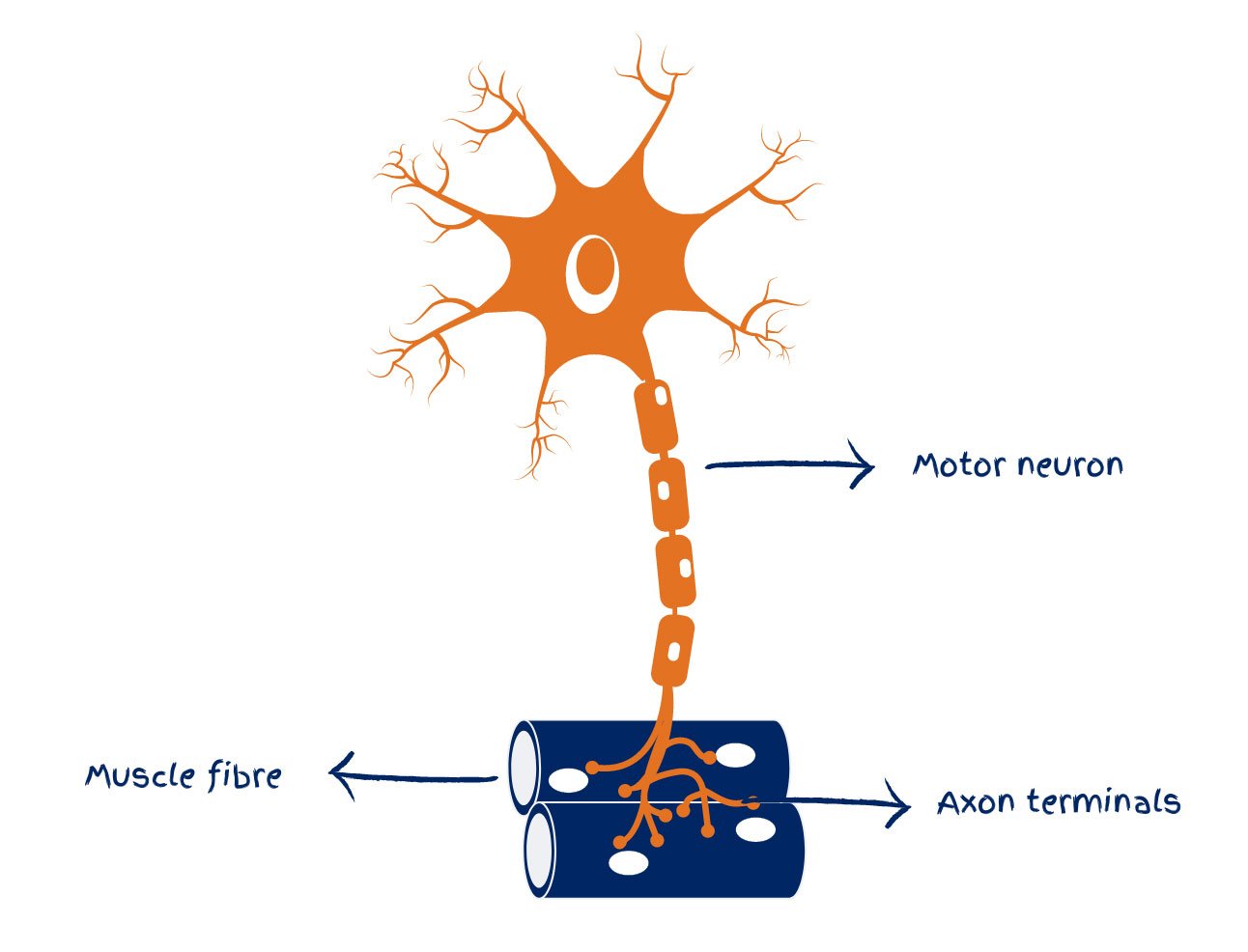
Motor neuron disease diagram

Types of Motor Neuron Disease

ALS (Amyotrophic Lateral Sclerosis)

The most common type, affecting both the upper and lower motor neurons. Most people diagnosed with MND have this type.

Progressive Bulbar Palsy

Mainly affects the muscles used for speaking and swallowing, often progressing faster than other types.

Progressive Muscular Atrophy

A rarer type that mainly affects the lower motor neurons, often progressing more slowly.

Primary Lateral Sclerosis

A rarer, usually slower-progressing type that mainly affects the upper motor neurons.

Common Early Signs

Muscle Weakness

Often starting in one hand, arm, or leg.

Muscle Twitching or Cramping

Small, involuntary movements, often in the arms or legs.

Slurred Speech

Changes in speech clarity, sometimes an early noticeable sign.

Difficulty with Everyday Tasks

Trouble with grip strength, walking, or fine motor movements.

Let's Be Honest

Should You Consider This?

We'd rather tell you the truth now than let you find out the hard way later.

The honest truth about MND treatment today

There is currently no stem cell treatment that stops or reverses motor neuron disease. If anyone tells you they can slow it down significantly or reverse your symptoms, especially if they're asking for a large amount of money, please be very cautious. This is a condition where families are unfortunately often targeted by clinics making promises that current medicine simply cannot back up.

It's Worth Talking to a Specialist If:

  • ✓You want to better understand the diagnosis and what to expect going forward.
  • ✓You want honest guidance on what can genuinely help with symptoms and day-to-day comfort.
  • ✓You've come across a treatment offer somewhere and want an honest second opinion before spending any money.
  • ✓You simply want someone to talk to who won't try to sell you false hope.

Please Be Careful If:

  • !A clinic promises to stop or reverse the progression of motor neuron disease.
  • !You're asked to pay a large amount upfront, before anyone properly reviews the medical history.
  • !The treatment is offered at a small, standalone clinic rather than a proper hospital.
  • !You're told to stop your current medication or care to try this instead.

What we'll actually do for you: If you reach out to us, a specialist will look at the diagnosis and give you a straight answer — including telling you clearly if there's nothing meaningful we can offer right now. We won't sell you false hope. Where we can, we'll also point you toward things that genuinely help with comfort and quality of life.

In Simple Terms

How the Treatment Works

Here's what actually happens, step by step, explained plainly.

Step 1

A Full Assessment First

A neurologist will review the diagnosis, how far the condition has progressed, and overall health, before discussing anything further with you.

Step 2

Cells Are Collected

If a specialist feels it's appropriate to proceed, cells are usually collected from the patient's own bone marrow through a straightforward medical procedure.

Step 3

They're Prepared and Given Back

Once prepared, the cells are typically given back through an IV drip or, in some cases, directly into the spinal fluid, depending on the specialist's recommendation.

Step 4

Care Continues Alongside

Regular care from your neurology team — including medication and supportive therapies — continues as normal throughout and after the process.

As mentioned earlier, this process does not stop or reverse motor neuron disease. It's explained here simply so you understand what's actually involved, in case you and your specialist decide it's worth exploring for supportive reasons.

Planning Ahead

What Does This Typically Cost?

We understand cost is often something families want a sense of. Here's a general, honest idea — not a reason to decide either way on its own.

Typical Starting Range
$5,000 – $12,000 USD

This is a general planning range, not a quote. The actual cost depends on the specific case and approach, confirmed only after a specialist review.

What Affects the Cost

  • How the condition has progressed so far
  • Which hospital and specialist is involved
  • Whether more than one session is discussed
  • Any additional monitoring or supportive care needed

Please read this before anything else: Cost should never be the reason to move forward with a treatment for motor neuron disease. As mentioned earlier, no current treatment stops or reverses this condition. We won't ask for any payment before a specialist has honestly reviewed the case and given you their real opinion — including if the answer is that this isn't likely to help.

Common Questions

Frequently Asked Questions

Straight answers to what families most often ask us about motor neuron disease and stem cells.

Can stem cells stop or reverse motor neuron disease? +

No. As of today, there is no treatment, including stem cells, that can stop or reverse motor neuron disease (including ALS, its most common form). Please be very cautious of anyone who tells you otherwise, especially if they're asking for a large sum of money.

Is MND the same as ALS? +

Largely, yes. Motor neuron disease is the broader term used mainly in India and the UK, and ALS is the most common type within it — the terms are often used interchangeably. A few rarer sub-types exist too, but ALS makes up most diagnoses.

Then why does this page exist? +

Because many families search for this, and we'd rather give an honest answer than let someone find one from a clinic that overpromises. If you've been offered a treatment somewhere, we're happy to give you an honest second opinion before you spend any money.

I saw a clinic promising real improvement with stem cells for MND. Should I trust it? +

We'd encourage real caution. Any promise of stopping or reversing motor neuron disease is not something current medicine can honestly back up. Feel free to share the details with us, and we'll give you a straightforward, honest opinion.

Is there anything that actually helps with MND symptoms? +

Yes. While there's no cure, a good neurology team, along with physiotherapy, speech therapy, breathing support, and other supportive care, can genuinely help with comfort and quality of life. We're happy to point you toward the right specialists for this.

Can I ask questions on behalf of a family member? +

Of course. Most people who reach out about MND are asking on behalf of a parent, spouse, or other loved one. You're welcome to share the details and we'll talk it through with you directly.

What should I share with you to get an honest opinion? +

The diagnosis, roughly how long symptoms have been present, and any details of a treatment you've already been offered elsewhere, if that's why you're reaching out. That's usually enough for a specialist to give you a straight, useful answer.

Will you pressure us into paying for anything? +

No. If there's genuinely nothing meaningful we can offer, we'll say so directly. We would rather be honest with you than take advantage of a difficult situation.

Have questions, or want a second opinion on something you've been told?

Talk to a Specialist — Free →
Scroll to Top