
Autoimmune Conditions

Stem Cell Therapy for Lupus in India

If lupus flare-ups keep coming back despite your current medication, it's natural to look for other options. HealPassage connects you with rheumatology specialists in India who can give you an honest opinion on whether stem cell treatment is worth exploring for your case.

🩺 Reviewed by rheumatology specialists
🇮🇳 Accredited hospitals across India
📋 Honest, realistic guidance

Lupus currently has no cure. Your regular medication remains the main way to manage it — stem cell treatment, where it's considered, is generally explored for severe cases that aren't responding well to standard treatment, not as a first option.

Stem cell therapy for lupus in India
Understanding the Condition

What Is Lupus?

In simple terms — what's actually happening in your body, and why it can affect so many different things at once.

Lupus is a condition where your immune system — which is supposed to protect you from infections — starts mistakenly attacking your own healthy tissue instead. This confusion in the immune system can affect many different parts of the body, which is part of why lupus can look so different from one person to another.

For some people, it mainly shows up as joint pain and skin rashes. For others, it can affect the kidneys, heart, or other organs. It's known for coming and going in waves — periods where symptoms flare up, followed by periods where things settle down, sometimes for a long time.

Because it affects everyone differently, treatment is usually built around your specific symptoms and how active the condition is at any given time, rather than a one-size-fits-all approach.
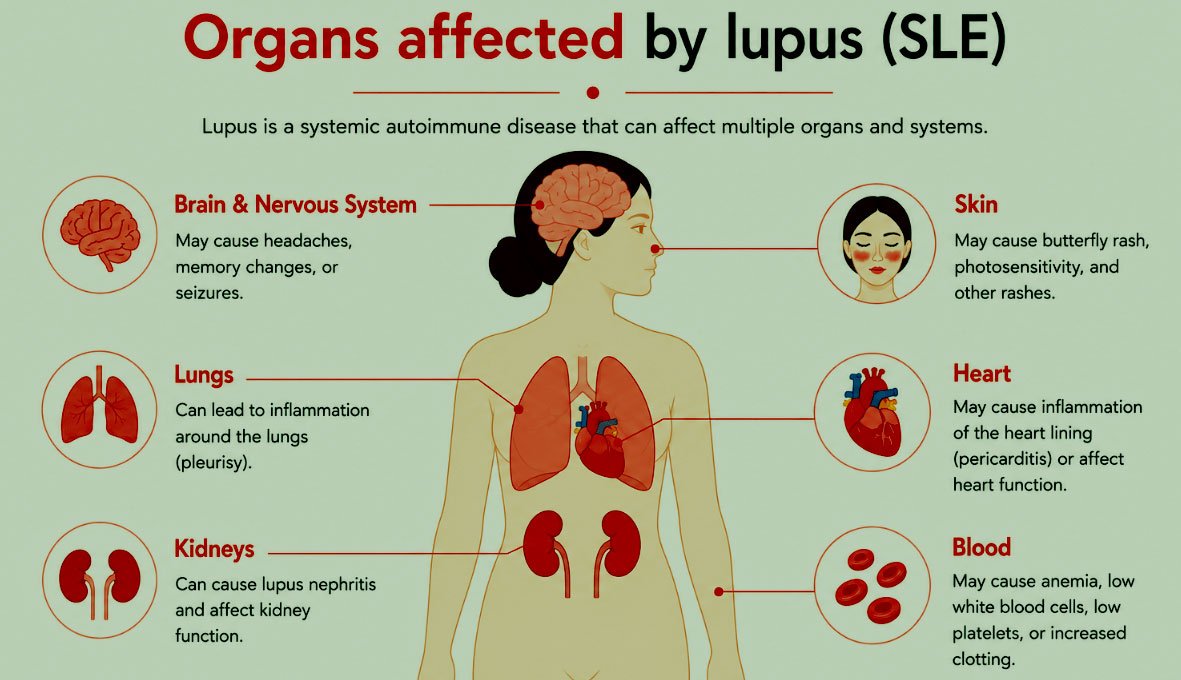
Lupus condition diagram

Parts of the Body Lupus Can Affect

Joints

Pain, stiffness, and swelling, often similar to arthritis.

Skin

Rashes, often across the cheeks and nose, and sensitivity to sunlight.

Kidneys

Can be affected in more serious cases, needing closer monitoring.

Blood & Energy

Persistent fatigue and, in some cases, low blood counts.

Common Symptoms

Ongoing Fatigue

Tiredness that doesn't really go away with rest.

Joint Pain & Swelling

Often in the hands, wrists, and knees.

Skin Rashes

Especially after time in the sun.

Fever & Flare-Ups

Unexplained low fevers during active periods.

A Straight Answer

Should You Consider This for Your Lupus?

This isn't something everyone with lupus needs — here's an honest way to think about it.

Where this actually fits in

For most people, lupus is managed well with regular medication, and that remains the main way to keep it under control. Stem cell treatment is usually only considered for more severe cases — where the disease is affecting major organs, or medication just isn't keeping flare-ups under control anymore. It's not a first-choice option, and it's not something every lupus patient needs to look into.

Worth Discussing Further If:

  • ✓Your lupus keeps flaring up badly despite being on regular medication.
  • ✓Your kidneys or other major organs have been affected, and standard treatment hasn't fully controlled it.
  • ✓You've been under a rheumatologist's care for a while and are still struggling with quality of life.
  • ✓You understand this is for more serious cases, not a general upgrade to everyday treatment.

Probably Not Necessary If:

  • !Your lupus is mild and reasonably well managed with your current medication.
  • !You haven't yet given your current treatment plan enough time to work, under a rheumatologist's guidance.
  • !A provider suggests stopping your medication in favor of this treatment — that's a serious red flag.
  • !You're being offered this without any real discussion of your disease activity or organ involvement.

Our approach: If you get in touch about lupus, a rheumatology specialist will look at how active your disease is, which organs are affected, and how you've responded to treatment so far. If your current medication is working reasonably well, we'll tell you honestly that this probably isn't something you need right now.

In Simple Terms

How the Treatment Works

Here's what actually happens, step by step, without the complicated medical language.

Step 1

A Full Health Check-Up First

Since lupus can affect different organs, a specialist will first check how active your disease is and which parts of your body are involved, before deciding if this treatment even makes sense for you.

Step 2

Cells Are Collected From You (or a Donor)

Depending on your case, cells may be taken from your own bone marrow, or in some cases from a matched donor, through a straightforward medical procedure.

Step 3

They're Prepared and Given Back

Once prepared, the cells are given back to you, usually through an IV drip, with the goal of calming down the overactive immune response causing your symptoms.

Step 4

You're Monitored Closely Afterward

Given how lupus can affect different organs, follow-up checks and blood tests are an important part of making sure things are heading in the right direction.

Planning Ahead

What Does This Typically Cost?

Since this treatment is usually only considered for more serious cases, it's a bigger, hospital-based cost — here's an honest general idea.

Typical Starting Range
$8,000 – $18,000 USD

This is a general planning range, not a quote. The actual cost depends on how your specific case is treated, which is only worked out after a specialist review.

What Affects the Final Cost

  • How severe your lupus is, and which organs are involved
  • Length of hospital stay needed
  • Which hospital and specialist you choose
  • Any additional tests or monitoring your case requires

These are general figures to help you plan, not a final price. We won't ask for any payment before a specialist has reviewed your case and given you an honest opinion. You'll get a clear, written estimate before you decide anything.

Common Questions

Frequently Asked Questions

Simple, honest answers to what people usually ask about lupus and stem cell treatment.

Can this cure my lupus? +

No, there's currently no cure for lupus. For severe cases that aren't responding well to regular medication, this treatment has helped some patients get their disease back under control for extended periods — but it's not a guaranteed fix, and results vary from person to person.

Should I stop my current medication to try this? +

No. Any change to your medication should only happen with your rheumatologist's guidance, as part of a properly planned process. Never stop your current treatment on your own or based on a provider's suggestion alone.

Is this only for severe lupus? +

Generally, yes. This is usually considered for cases where lupus is affecting major organs or isn't responding well to standard medication — not for mild or well-managed lupus. If your current treatment is working reasonably well, this likely isn't something you need right now.

Is it a quick, simple procedure? +

No — this is a more involved, hospital-based treatment, not a quick injection. It requires proper medical supervision and monitoring, given that lupus can affect multiple organs. Be cautious of anyone offering this as a simple, same-day treatment.

What reports should I share for an initial opinion? +

Your lupus diagnosis, recent blood test results, which organs (if any) have been affected, and a summary of the medications you've tried. This gives a specialist enough to give you an honest opinion on whether it's worth exploring further.

What if I'm not a good candidate? +

Then we'll tell you clearly and explain why. Our goal is to give you an honest picture, not to push a treatment you don't need. If your current treatment plan is the right path for now, we'll say so.

Have a diagnosis and want an honest specialist opinion?

Scroll to Top